

Legacy System Modernization Strategies That Keep the Business Running
There are only four real options for an ageing system, and the one most teams reach for is the one that goes wrong most. Here are the criteria for each, including doing nothing.


There are four legacy system modernization strategies and everything else is a blend of them: leave it alone, wrap it behind an API, replace it piece by piece behind a routing layer, or rewrite it and cut over. The right answer is decided by two things — whether the platform underneath is still supportable, and whether the business needs the system to change. Not by how unpleasant the code is to read.
I have been in the room for this decision from both sides, as the person who would have to build the replacement and, later, as the person quoting for it. The pattern I keep seeing is that the technical discussion starts at option four and works backwards, when the honest order is the opposite.
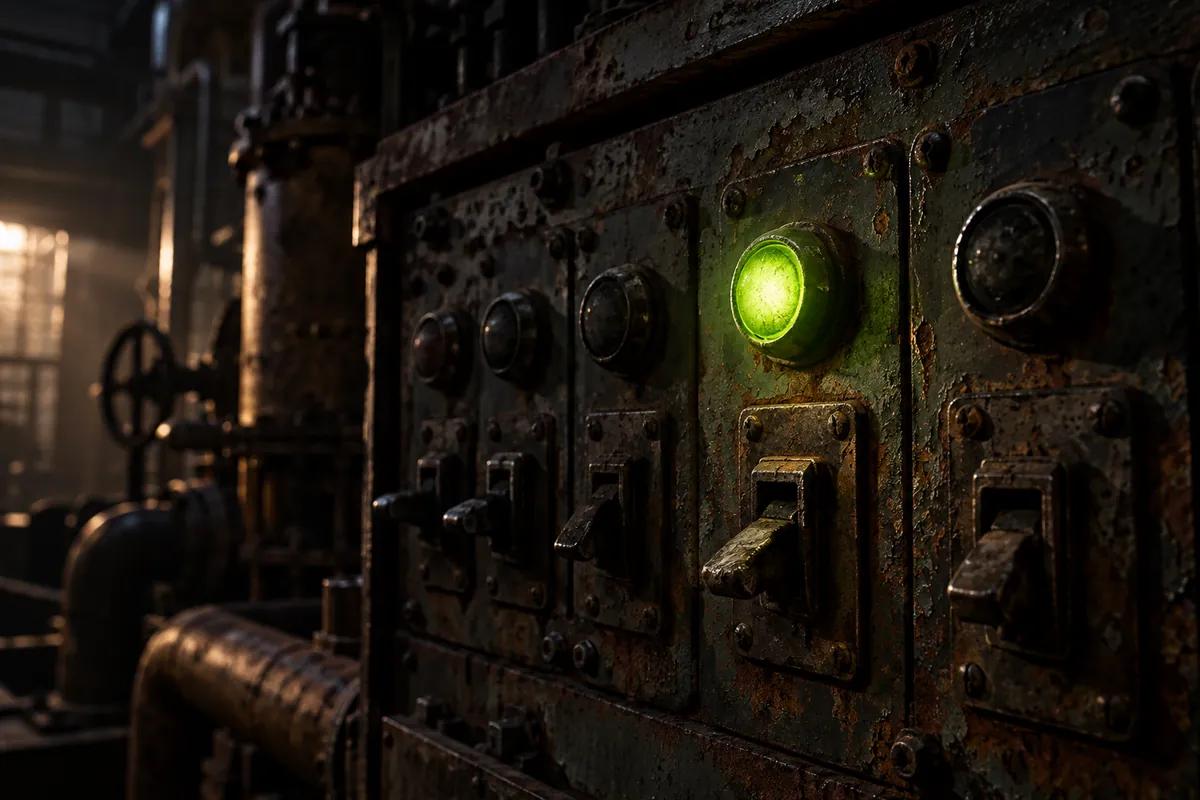
The four legacy system modernization strategies
| Strategy | What you do | Best when | Main risk |
|---|---|---|---|
| Leave it | Maintain, patch, do not invest | Stable, supported, nobody blocked | Drifting into unsupported territory without noticing |
| Wrap it | Put an API or facade in front; build new work against that | Core logic is sound, the interface is the problem | The wrapper becomes another layer nobody understands |
| Strangle it | Route traffic through a facade, move one capability at a time | System must keep running while it changes | Long transition; needs discipline to finish |
| Rewrite it | Build a replacement, cut over | Platform itself is unsupportable or unstaffable | Everything below |
Work down that table in order. Stop at the first row where the answer is honestly yes.
The case for doing nothing
Almost nobody writes this one up, because there is no project in it for anyone. It is still the correct answer more often than the industry admits.
A system deserves to be left alone when all of the following hold:
- It does its job and the business is not asking it to do a different one
- The platform, framework and runtime still receive security updates
- You can still find people who can maintain it, or you already employ them
- Nothing on next year's plan is blocked by it
- The cost of running it is not climbing
"The code is old" is not on that list. Neither is "our developers do not like it", nor "it is not on the current stack". Age is not a defect. A twelve-year-old system that processes orders correctly every day is an asset that has already paid for itself many times over, and spending six figures to reproduce its behaviour on a newer framework buys you the same outcome with new bugs in it.
What doing nothing does require is honesty about the exit conditions. Write down the specific triggers that would change the answer — an end-of-life date for the runtime, a compliance requirement it cannot meet, the retirement of the one person who understands it, a product decision it cannot support. Review them once a year. That converts "we are ignoring it" into a decision, which is a different thing entirely, and it is the same discipline as recording a shortcut at the moment you take it, which we covered in technical debt explained for the person paying.
Wrapping it behind an API
The second option assumes the logic inside the system is worth keeping and the problem is that nothing can talk to it.
You put an interface in front of the old system — a small service that exposes clean, documented endpoints and translates them into whatever the legacy system understands underneath. New work gets built against the interface. The old system carries on doing what it does.
This is the cheapest genuine modernisation available, and it buys a surprising amount:
- New products, mobile apps and integrations can be built without touching the old code
- The legacy system's oddities stop leaking into everything new, because the wrapper absorbs them
- You get a natural seam. Later, if you do replace pieces of the old system, the callers do not need to know
Two conditions have to be true. The old system needs some way to be called — a database you can read, a file drop, a SOAP endpoint, a stored procedure, anything programmable. And somebody has to be able to describe the business rules well enough to define a sane interface, which in an undocumented system is real archaeology, not a week's work.
The failure mode is a wrapper that leaks. If the new interface simply exposes the legacy field names, the legacy states and the legacy quirks, you have added a layer and modernised nothing. The interface should describe the business, not the database.
Strangler fig replacement
This is the approach I recommend most often, and it is the one the major architecture references converge on. Martin Fowler named it after the strangler fig, which grows around a host tree until it can stand on its own, and Microsoft documents the mechanics in the Azure Architecture Center.
The shape is simple. A facade sits between the users and the systems. Initially it routes everything to the old system. You build one capability in the new system, point the facade at it for that capability only, and leave everything else alone. Repeat. When nothing routes to the old system, you switch it off and eventually remove the facade.
What makes it work in practice:
- Every step is small enough to test and reverse. If a capability misbehaves, you route it back. There is no single night on which the company's ability to trade depends.
- Value arrives during the programme, not at the end. The first capability you move should be one the business actually wants improved, so the work funds its own credibility.
- You learn the rules while the old system is still there to check against. You can run both and compare outputs, which is the only reliable way to recover undocumented behaviour.
What it costs:
- Transitional architecture. The facade, the routing rules and the synchronisation code are all work you will delete later. Fowler is direct that this looks wasteful and is worth it anyway; the Microsoft guidance says the same, and adds that the facade must not become a bottleneck or a single point of failure.
- Discipline to finish. The characteristic failure is a programme that moves the easy capabilities, declares success, and then runs two systems forever. Agree at the start which capabilities are in scope and what "done" means, and keep the remaining list visible.
- A way for the two systems to talk. While both are live, each will occasionally need the other. Microsoft's guidance recommends an anti-corruption layer for this — an adapter that translates between them, so the new system is not forced to adopt legacy conventions it is trying to escape.
Where requests cannot be intercepted, or you have no access to the legacy source, this approach does not apply.
Inside a single codebase the equivalent is Fowler's branch by abstraction: put an abstraction between the callers and the component you want to replace, build the new implementation behind it, then switch callers over gradually. The system builds and runs correctly throughout, so releases continue during the replacement.
The full rewrite
Of the four, this is the one we advise against most often, and the argument is not new. Joel Spolsky called rewriting from scratch the single worst strategic mistake a software company can make in 2000, and his central point still holds: the ugly parts of old code are usually bug fixes. Each one looks like mess and is actually a hard-won correction for a real edge case discovered in production. A rewrite discards all of them at once and rediscovers them one support ticket at a time.
Three things make a rewrite go wrong that are nothing to do with engineering quality.
Nobody can specify the old system. The requirements are not in a document, they are distributed across the code, the data and the memories of the people who use it daily. Teams consistently underestimate this because reading code is harder than writing it, so the old system looks simpler than it is.
The business does not stop. For the duration of the rewrite you either freeze changes to the live system — which the business will not accept once it is inconvenient — or you implement every change twice. Both are expensive and neither is in the original estimate.
There is no partial delivery. Until the replacement handles everything, it handles nothing. A programme with a single payoff at the end has no natural point at which to correct course, and no evidence to justify continuing when it overruns.
There are real cases for it. The platform is genuinely unsupportable and cannot be hosted safely. Nobody available can work in the language. The system is small enough that reproducing it is a matter of weeks. The requirements have changed so fundamentally that you are building a different product rather than the same one on newer tools. If one of those is true, say so plainly and plan for the freeze rather than pretending it will not happen.
What to do about the data
Data is where modernisation programmes actually fail, and it is usually the last thing anyone plans. The code is a known quantity. The data contains a decade of decisions nobody remembers making.
Expect to find fields used for two different purposes depending on when the record was created, records that violate constraints you assumed were enforced, totals stored rather than derived and now disagreeing with their own line items, and free-text columns holding structured information because there was nowhere else to put it. None of that is unusual. All of it has to be resolved before a new system can trust the data.
A workable sequence:
- Profile before you design. Query the real data for nulls, duplicates, out-of-range values and orphaned relationships. Design the new schema against what is in there, not what the old documentation says should be.
- Decide what you are not migrating. Ten years of history is rarely all needed live. Move what the business uses, archive the rest somewhere readable, and write down where it went.
- Name one source of truth at every moment. During a transition both systems may hold records. One of them is authoritative for each entity, and everyone needs to know which. Ambiguity here is how records get silently overwritten.
- Rehearse the cutover on a copy, repeatedly. Time it. If the migration takes longer than your acceptable downtime window, you need an approach that syncs continuously rather than one that copies in a single pass — the Microsoft guidance describes exactly this, using an initial load followed by change data capture to keep the two in step until cutover.
- Reconcile with numbers the business recognises. Not row counts. Total outstanding balance, order count for last month, stock valuation. A finance person spotting a discrepancy before go-live is the cheapest form of testing available.
Anything customer-facing carries a second layer of risk, because addresses that change break more than navigation. The redirect and mapping discipline in our WooCommerce to Shopify migration checklist is written for stores, but the reasoning applies to any migration where URLs move.

Modernising while the business keeps running
Whichever of the middle two options you pick, the same practices decide whether it is survivable.
Move a capability people care about first. Not the easiest module, and not the one engineers find most annoying. The first delivery has to be visible to the business, because that is what funds the second one.
Keep the old system running unmodified for as long as you can. Every change to a system you are replacing is work you will pay for twice.
Make each step independently useful. If the programme were cancelled after step three, would steps one to three still have been worth doing? If the answer is no, the steps are too big.
Run both and compare. For critical calculations — pricing, tax, allocations, balances — run the new implementation alongside the old against real inputs and diff the results before you switch anything. This is how you find the undocumented rules while there is still something to find them against.
Write down what you learn as you go. The reason the old system is hard to replace is that nobody documented it. If you rebuild it the same way, you have bought yourself the same problem with a newer framework.
On systems where the business logic is the product — the kind of FIFO payment allocation and inventory costing rules we built into HisaabKar, or the admin-controlled feature flags that let GeoTagImg change limits and promotions without a redeploy — those rules are the thing worth preserving. The framework is replaceable. The logic is the asset.
Choosing
Start at the top and stop at the first honest yes.
- Is the system stable, supported and not blocking anything? Leave it alone, and write down what would change that answer.
- Is the logic sound but nothing can talk to it? Wrap it, and build everything new against the wrapper.
- Does it need to change substantially while continuing to run? Strangle it, one capability at a time, starting with one the business wants.
- Is the platform itself unsupportable, unstaffable, or small enough to reproduce quickly? Rewrite it, and budget for the freeze and the dual running you will otherwise discover halfway through.
The failure mode to watch for is arriving at option four because the code is unpleasant rather than because the platform is finished. If the case for a rewrite rests on developer preference, it is a technical debt conversation, not a modernisation one, and it costs a fraction as much to have.
If you are earlier than this and still deciding whether the replacement should be bespoke at all, our custom software vs off-the-shelf framework covers that fork first. When the decision is made, custom software development and ongoing software development are where we do this work.
Frequently asked questions
- What are the main legacy system modernization strategies?
- There are four. Leave the system alone and maintain it. Wrap it behind an API so new work can be built against a clean interface. Replace it feature by feature behind a routing layer, known as the strangler fig approach. Or rewrite it entirely and cut over. Most real programmes combine wrapping and incremental replacement.
- Is it better to rewrite or refactor a legacy system?
- Incremental replacement is safer in almost every case where the system still earns money. A rewrite means running two systems, freezing improvements to the old one, and betting that a team who did not write the original can reproduce every undocumented rule inside it. Rewrites make sense mainly when the platform itself is unsupportable.
- Why do full software rewrites fail so often?
- Because the value of an old system is not in its code but in the thousands of small corrections made to it over years, most of which were never written down. A rewrite starts without them. Meanwhile the business keeps asking for changes, so you either freeze the roadmap or maintain two systems at once.
- Can you modernise a system without downtime?
- Usually yes, if you route traffic through a facade and move one capability at a time. Each move is small enough to test and reverse, so the business keeps running throughout. The part that needs real planning is the data, because a period where both systems hold records requires one side to be the agreed source of truth.
- When is doing nothing the right answer for a legacy system?
- When the system is stable, the platform is still receiving security updates, the business is not asking it to change, and nobody is blocked by it. Modernisation is only worth funding when it unlocks something specific. An ageing system that quietly works is an asset, not a problem waiting to happen.
About the author

Burhan Tahir
Founder & CEO
Founder of Devfinix, ten years in development, project delivery and client acquisition. Writes about what software projects really cost and why estimates miss.
Work with us
Want this done properly?
We build and market the things we write about. Tell us what you're working on and we'll give you a straight answer on how we'd approach it.
Start a ProjectRelated reading

Technical Debt in Software Development, Explained for the Person Paying
Some technical debt is a sound business decision and some is negligence. Here is how to tell which one your team is carrying, and what to ask for so it stops compounding quietly.
Rebuilding an AI-Built App for Production: What It Costs
The prototype is not 80% of the product. Here is what survives the rebuild, what always gets thrown away, and what the cost really tracks.

How Much Does Custom Software Development Cost? A Quote, Line by Line
Two agencies price one brief very differently, and it is almost never the rate. It is what each of them put in the quote and what they left out.
Newsletter
One useful email a month
What we learned shipping client work — the fixes that moved numbers and the ones that didn't. No pitches, and we stop the moment you ask.